Best Portable Power Stations for CPAP Machines in 2026
Compare CPAP power stations and batteries by watt-hours, DC efficiency, humidifier limits, noise, portability, recharge options and safety.
Disclosure: We may earn from Amazon links. Recommendations are based on specs and editorial criteria, not paid placement. Details
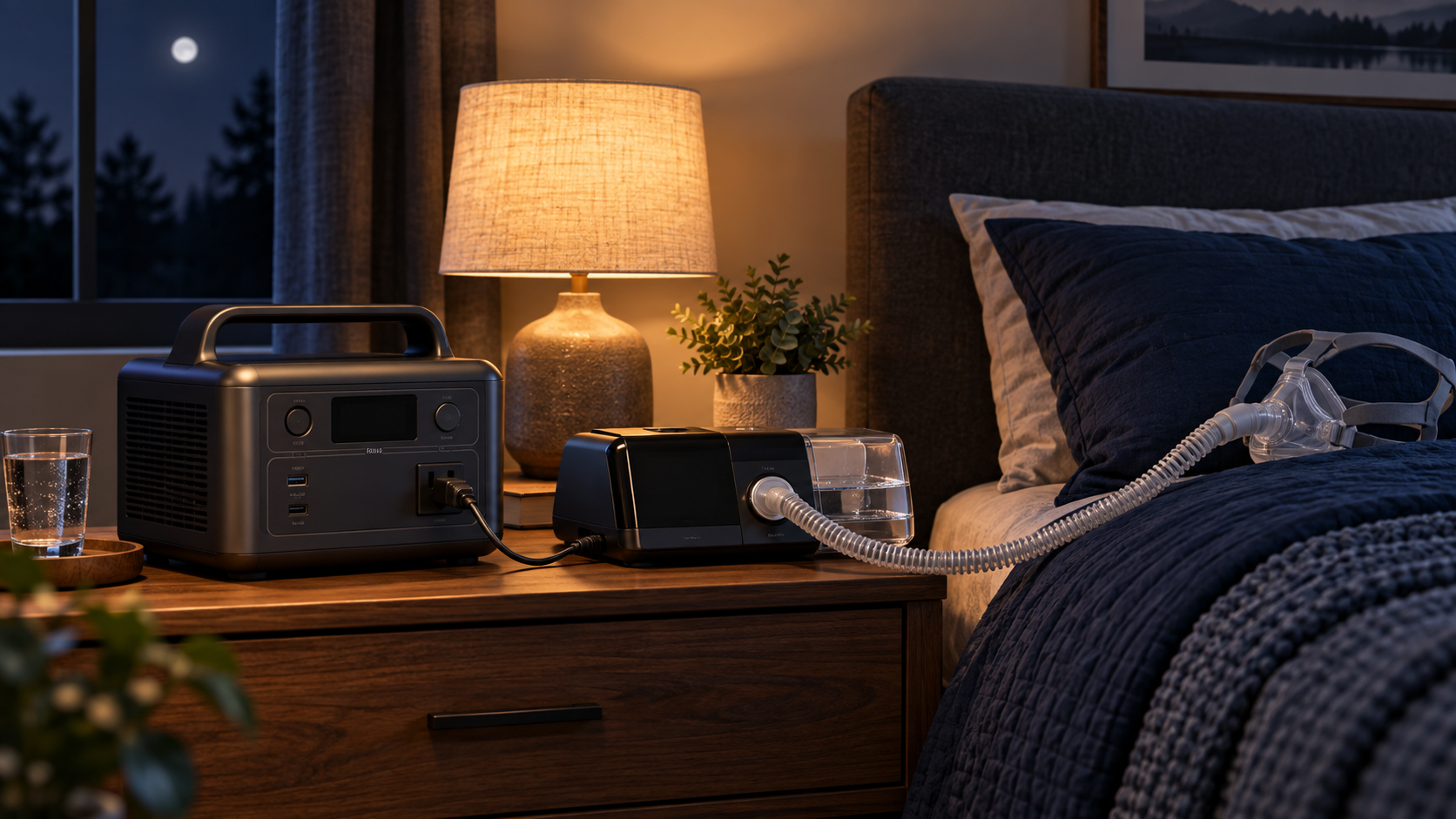
At a Glance
CPAP backup power is different from ordinary device charging. Humidifier settings, heated tubing, AC versus DC conversion, machine compatibility, and overnight reserve can change the answer more than the advertised watt-hour number.
This guide is based on current product pages, published specifications, product images, capacity, output, port, and compatibility claims. It is buying guidance, not medical advice. Confirm any backup setup with your CPAP manufacturer, equipment provider, or clinician before relying on it for therapy.
5 Criteria to Look For Before Buying a Portable Power Stations for CPAP Machine
Key buying criteria so you get the right fit the first time.
Measure your exact CPAP load
A ResMed, Philips, or Luna setup can behave very differently depending on pressure, leak rate, humidifier, and heated tubing. The EASYLONGER listings explicitly warn that humidifiers and heaters reduce runtime. Test a full night with your real settings before counting any battery as backup.
Prefer efficient DC paths when compatible
Running CPAP through AC can waste energy because the battery converts DC to AC and the CPAP brick converts back to DC. Products with car sockets, DC outputs, or machine-specific cables may improve runtime when the cable is approved for your exact machine. Never improvise voltage or polarity.
Decide between general power station and CPAP-specific battery
The GRECELL EB500 can also run phones, router, lights, and small emergency loads, while EASYLONGER models are more CPAP-focused. A general station is more flexible, but a CPAP-specific battery may include useful cables and clearer therapy-oriented limitations.
Check travel rules before buying
The EASYLONGER ES960 listing says it exceeds the 160Wh TSA limit and is not TSA-approved for air travel. Smaller batteries may travel more easily, but capacity may be too limited for humidified therapy. Match the battery to the trip type, not just the nightly runtime.
Plan reserve, not just one perfect night
A battery that barely completes one ideal night leaves no margin for aging, cold rooms, higher pressure, mask leaks, or delayed recharging. If CPAP therapy is essential, consider backup layers and a written outage plan. Consult your clinician or equipment provider for therapy-specific questions.
Best Portable Power Stations for CPAP Machines in 2026
GRECELL EB500

About this pick
GRECELL EB500 is the best overall power station for shoppers who need overnight CPAP backup with a more specific set of tradeoffs. Its most useful published details are 519Wh capacity, 500W continuous output, and pure sine-wave output. It is the easiest default pick here when the buyer wants one shortlist option before comparing tradeoffs. For CPAP searches, overnight reserve, humidifier settings, and AC versus DC connection matter more than headline capacity. That makes it easier to judge by fit rather than by a single oversized headline claim.
The most useful published details here are 519Wh capacity, 500W continuous output, and pure sine-wave output. Accessories can solve a real problem, but they can also create a weak link when connector type, rating, size, or placement is wrong. Buyers should compare it against the exact generator, panel, cord, or storage routine they already use. For overnight CPAP backup, fit is more important than a long feature list.
The downside is that accessories fail quietly when the details are wrong. A cover can restrict cooling, a cord can be undersized, a kit can miss the right engine, and a detector can be placed poorly. Skip this pick if the exact model or rating cannot be verified. It is useful when it removes friction without creating a new safety problem.
Best for: Home CPAP backup where capacity reserve matters more than pocket-size travel.
Check price on AmazonSpecs
- Capacity: 519Wh
- AC output: 500W pure sine wave
- DC output: 12V car port, DC ports
- Recharge: Wall, car, compatible solar panel
Pros
- +CPAP runtime questions get better focus
- +Balanced specification mix suits most general buyers
- +Pure battery power supports quiet overnight use
- +500W handles many everyday portable appliances
Cons
- −Humidifier settings can change runtime sharply
- −Balanced design may not lead every specification
- −Humidifier use can shorten overnight runtime
Jackery Explorer 300

About this pick
Jackery Explorer 300 earns the best travel-light station label because 292Wh capacity, 300W continuous output, and 600W surge output give it a clear role in overnight CPAP backup. It works best as a fallback option when the top picks are too large, too specialized, or harder to source. For CPAP searches, overnight reserve, humidifier settings, and AC versus DC connection matter more than headline capacity. As a backup-power accessory, it should be compared against products solving the same job, not against every power product with a similar title.
The useful question is not whether the accessory looks compatible. It is whether 292Wh capacity, 300W continuous output, and 600W surge output match the actual backup-power routine. Generator accessories often fail at the edges: too short a cord, wrong inlet shape, poor cover fit, or missing service part compatibility. This pick is worth considering when those details line up cleanly.
The product has value only if it improves the real routine. For overnight CPAP backup, that means faster setup, safer spacing, clearer maintenance, or better storage. Skip it if it adds another part to remember without solving a specific weak point. Choose it when it makes the backup-power system easier to use correctly.
Best for: Short CPAP backup windows, road travel, and users who want a small general-purpose station.
Check price on AmazonSpecs
- Capacity: 292Wh
- AC output: 300W rated, 600W surge
- Weight claim: 7.5 lb
- Ports: AC, USB-C PD, USB-A, 120W car port
Pros
- +CPAP runtime questions get better focus
- +Heavier-duty design suits demanding regular use
- +Pure battery power supports quiet overnight use
- +292Wh keeps the battery reasonably portable
Cons
- −Humidifier settings can change runtime sharply
- −Heavy-duty format can increase transport burden
- −Humidifier use can shorten overnight runtime
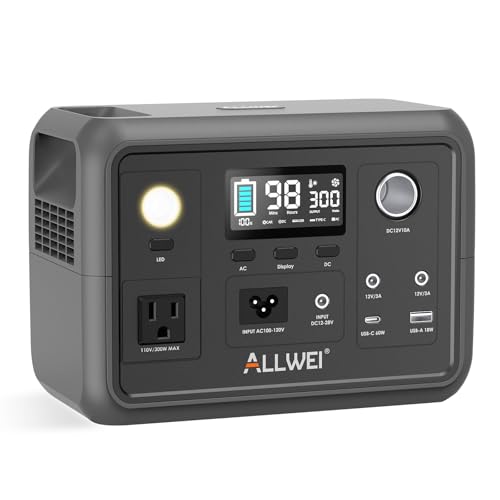
ALLWEI PPS300-4
About this pick
ALLWEI PPS300-4 is not a whole-home backup pick, and that is the point. 256Wh moves it into a more useful weekend and short-outage tier, especially when the buyer can recharge daily or keep the load list narrow. For portable power stations for CPAP, the useful comparison is how the product behaves in the buyer's actual routine rather than how large the headline numbers look. Its best use is a planned low-draw kit where the buyer knows which devices matter first.
Runtime should be estimated from the actual device wattage, because small stations can look generous until several low-draw devices run together for hours. 300W output gives more room for laptops, small appliances, and compact refrigeration, but it still needs load sequencing. Solar input matters only if panel wattage and charging limits are realistic.
At 6.4 lb, it is still reasonably portable, but buyers should picture where it will sit during charging and use. The practical move is to pair it with a written load list: phone watts, router watts, lamp watts, and recharge method. If that list is vague, this class of station is easy to overbuy or misuse.
Best for: Efficient CPAP setups where low weight and LFP chemistry matter.
Check price on AmazonSpecs
- Capacity: 256Wh
- Battery: LiFePO4
- AC output: 300W continuous, 600W surge
- Recharge: AC, car, solar, AC plus solar
Pros
- +CPAP runtime questions get better focus
- +Compact design favors limited storage spaces
- +Pure battery power supports quiet overnight use
- +6.4 lb weight stays easy to carry
Cons
- −Humidifier settings can change runtime sharply
- −Compact format limits maximum capability headroom
- −Humidifier use can shorten overnight runtime
EASYLONGER ES400 AIR

About this pick
EASYLONGER ES400 AIR is the best cpap-specific travel battery for shoppers who need overnight CPAP backup with a more specific set of tradeoffs. Its most useful published details are 148Wh capacity. This is the alternative to keep on the shortlist when the main picks miss a specific fit requirement. For CPAP searches, overnight reserve, humidifier settings, and AC versus DC connection matter more than headline capacity. That makes it easier to judge by fit rather than by a single oversized headline claim.
The most useful published detail here is 148Wh capacity. Accessories can solve a real problem, but they can also create a weak link when connector type, rating, size, or placement is wrong. Buyers should compare it against the exact generator, panel, cord, or storage routine they already use. For overnight CPAP backup, fit is more important than a long feature list.
The downside is that accessories fail quietly when the details are wrong. A cover can restrict cooling, a cord can be undersized, a kit can miss the right engine, and a detector can be placed poorly. Skip this pick if the exact model or rating cannot be verified. It is useful when it removes friction without creating a new safety problem.
Best for: CPAP users who want a smaller CPAP-focused battery with included compatibility cables.
Check price on AmazonSpecs
- Capacity: 148Wh
- Compatibility: Includes CPAP cables for several listed machines
- Pass-through: Can power while charging per listed specifications
- Recharge: AC, car charger, compatible solar panel
Pros
- +CPAP runtime questions get better focus
- +Value-focused design prioritizes essential practical capabilities
- +Pure battery power supports quiet overnight use
- +Correct match reduces outage setup friction
Cons
- −Humidifier settings can change runtime sharply
- −Value focus may omit premium conveniences
- −Humidifier use can shorten overnight runtime
EASYLONGER ES960

About this pick
EASYLONGER ES960 belongs in this shortlist when the buyer wants a defined small-power role instead of chasing the biggest printed number. 297.6Wh moves it into a more useful weekend and short-outage tier, especially when the buyer can recharge daily or keep the load list narrow. For portable power stations for CPAP, the useful comparison is how the product behaves in the buyer's actual routine rather than how large the headline numbers look. That makes it easier to compare against the other picks by real use, not by category label.
The missing continuous-output detail is the main caution, because inverter rating decides what can actually start and run. The listing should be checked for port layout, charging input, and whether the outlets match the devices the buyer actually plans to run. Runtime should be estimated from the actual device wattage, because small stations can look generous until several low-draw devices run together for hours.
Because weight is not the standout spec here, buyers should verify the listed dimensions before assuming it fits a backpack, drawer, or small vehicle kit. The practical move is to pair it with a written load list: phone watts, router watts, lamp watts, and recharge method. If that list is vague, this class of station is easy to overbuy or misuse.
Best for: CPAP-first backup at home or by car where more dedicated battery capacity is useful.
Check price on AmazonSpecs
- Capacity: 297.6Wh
- Battery: LiFePO4
- Compatibility: CPAP cable bundle for several listed machines
- Travel note: Exceeds 160Wh TSA limit per listing
Pros
- +CPAP runtime questions get better focus
- +Backup positioning offers a simpler alternative
- +Pure battery power supports quiet overnight use
- +297.6Wh fits short-duration electronic device use
Cons
- −Humidifier settings can change runtime sharply
- −Backup role offers less performance headroom
- −Humidifier use can shorten overnight runtime
How We Evaluated These Portable Power Stations for CPAP Machines
Each pick was assessed across 4 criteria weighted for real-world use.
Published product specifications
We used published product details for product page URLs, images, capacity, output, compatibility language, port details, and recharge claims. We did not use price, star ratings, or review counts. The published specifications helped distinguish general power stations from CPAP-focused batteries.
CPAP-specific practicality
We weighted overnight reserve, connection options, DC efficiency potential, and compatibility notes more heavily than peak AC output. A 500W AC inverter does not matter much if the CPAP draw is modest, but capacity and cable compatibility matter a lot. Products that clearly state humidifier or heated-tube limits received more careful framing.
Bedroom and outage usability
Size, weight, output types, recharge methods, and whether the battery can also support basic outage devices all influenced placement. A home backup station like the GRECELL EB500 is more versatile, while EASYLONGER batteries are more CPAP-specific. The rankings reflect those different roles instead of forcing one universal answer.
Safety and medical caution
We treated CPAP as an electricity-dependent device scenario, not just a camping accessory. Every recommendation assumes the buyer will verify machine compatibility and test the setup before relying on it. We avoided claims that any consumer battery is a medical-grade universal backup.
How to Choose the Right Portable Power Stations for CPAP Machines
Pick by use case first
| Use case | Better class | Example |
|---|---|---|
| Home outage plus phones and router | General power station around 500Wh | GRECELL EB500 |
| Short travel or road trip backup | Small station or CPAP-specific battery | Jackery Explorer 300 or EASYLONGER ES400 AIR |
| CPAP-first multi-night local backup | Dedicated CPAP battery around 300Wh | EASYLONGER ES960 |
Run a full-night test before storm season
Charge the battery fully, connect the CPAP exactly as planned, use the settings you expect during an outage, and record remaining capacity in the morning. Repeat the test if you change humidifier, heated tube, pressure, mask, or cable path. Keep the result with your emergency plan.
Do not treat UPS claims as medical approval
Some power stations offer pass-through or backup behavior, but transfer time and compatibility vary. If uninterrupted therapy is medically important, ask your provider what backup arrangement is appropriate. A consumer power station should be proven with your exact machine before use.
Frequently Asked Questions
How many watt-hours do I need for CPAP?
It depends on machine, pressure, humidifier, heated tubing, and AC or DC connection. Many efficient setups can run overnight on a few hundred watt-hours, but heated comfort features can greatly increase draw. Test your exact setup instead of relying on a generic estimate.
Is a CPAP-specific battery better than a power station?
A CPAP-specific battery may include the right cables and clearer therapy-focused limitations. A general power station is more flexible for phones, router, lights, and other outage devices. The better choice depends on whether CPAP or whole-emergency versatility is the priority.
Can I fly with a CPAP battery?
Only if the battery meets airline and TSA lithium battery limits and is packed correctly. The EASYLONGER ES960 listing says it exceeds the 160Wh TSA limit and is not TSA-approved for air travel. Check the exact watt-hour rating and airline rules before flying.
Should I turn off the humidifier to save battery?
Turning off or lowering humidification can extend runtime, but it can also affect therapy comfort and adherence. Ask your clinician or equipment provider before changing therapy settings. If they approve an emergency setting, test that setting with the battery.
Can a portable power station damage a CPAP machine?
Use only compatible AC adapters or manufacturer-approved DC cables. Pure sine wave AC output is generally preferred for sensitive devices, but voltage, connector, polarity, and power limits still matter. Do not improvise cables.
Can two CPAP machines share one power station?
They can only share a station if combined draw, outlets, and runtime reserve are sufficient. In many households, two separate batteries provide better redundancy. Test both machines together if you plan to share one station.
Can solar recharge a CPAP battery during an outage?
Yes, if the battery supports compatible solar input and the panel is sized realistically. Small panels may only top up slowly, especially in poor weather. Solar is helpful, but stored capacity still matters for overnight therapy.
Bottom Line
best overall: GRECELL EB500 - best overall power station pick in this roundup.
See the full rankings above for all picks with pros, cons, and best-for summaries.
Browse on Amazon
All Prime-eligible options with current pricing.
Shop on Amazon →Related Guides
Sources and further reading
Manufacturer specifications and safety guidance consulted for this guide. Always confirm the current manual for the exact model you buy.